

Search Website
Community trust and real consent to research in public health emergencies: An Interview with César Mombunza
Daniel Brisebois, Research Trainee, Western University Faculty of Health Sciences
Central Africa is facing a new Ebola epidemic. While the Democratic Republic of the Congo stands at the center of this outbreak, cases are being confirmed in neighboring countries (World Health Organization: WHO, 2026). As the urgency to develop a vaccine for the new Bundibugyo variant rises, affected communities worry that the speed at which the vaccine is being developed is coming at the cost of safety, a concern that echoes the skepticism many had towards COVID-19 vaccines, which were developed at a similarly unprecedented pace (Brown et al., 2022).
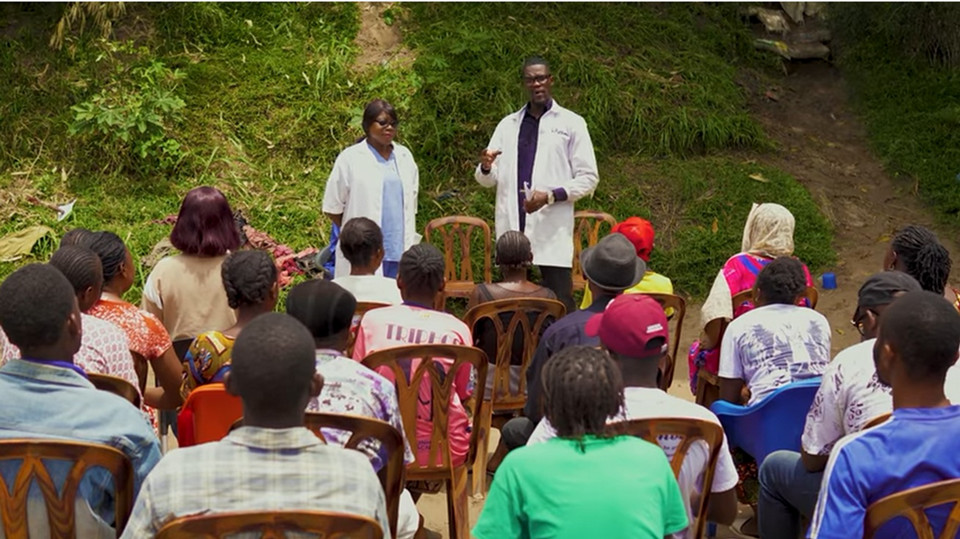
Over the past 18 months, I have been working with Western University-based professor Elysée Nouvet to support knowledge translation efforts linked to her scholarship in critical global health. This work has included supporting the Participants' Research Ethics Toolbox (PRET) — a toolkit built to help limited-literacy participants in Ebola-affected countries understand their rights as research participants. In an active outbreak, when individuals and communities are approached to participate in research, informed consent may be compromised by different factors such as time pressure, misunderstanding, or vulnerability (Nouvet et al., 2016; Kaye et al., 2019; Bhatt, 2020). The latest PRET activities co-led by Dr. Nouvet with African partners have involved offering Train-the-Trainer workshops to community leaders in Kinshasa, Democratic Republic of Congo, on use of the PRET to organize and run workshops aimed at creating discussion and increasing community-based awareness of options and rights vis-à-vis invitations to partake in Mpox, Ebola, or other research. A key partner for this work has been César Azuba Mombunza. During the workshop, César noticed that participants who were eager to offer these workshops in their own communities suggested that providing more information about the clinical trials of the mpox vaccine would help address the widespread skepticism surrounding these trials, such as the belief that vaccines are developed too hastily.
In this context, Dr. Nouvet asked me to interview César about his work and the idea behind a short 12-minute movie his organization co-developed with Dr. Nouvet called “Why do we need Mpox Trials?” As someone new to the global health field, I was nervous and excited by the opportunity to conduct my very first interview. I was about to sit down and talk with an expert who had extensive understanding of how epidemic-affected communities may feel about researchers and clinical trials, and why informed consent is crucial — both important topics for my own development within the field. What follows is our conversation, translated from French and edited for clarity.
Q: Tell me about the film that CONERLA+ has just finished. What is it about, and what motivated you to make it?
A: During our training on the toolkit [PRET] regarding the rights of research participants, it became clear that the participants realized it was important to update the discourse on clinical trials. Why? Because, in their view, the community needs to adopt a different approach, given that we have new technology today. In the sense that people need to understand why clinical trials are important for communities. Among other things, people were saying: “But vaccines are produced very quickly these days.” We needed to break that misconception down. We also needed to build community support for the vaccine. And it was from that training session that we got the idea to make a short film.
Q: What are your main concerns or questions when researchers approach you to ask for your collaboration on their research?
A: You know, when researchers come, the community has concerns. These concerns are not at all the same as those of the researchers. What’s important is that researchers must try to connect the community’s concerns with the concerns of the research. Researchers need to address the questions the community is asking about confidentiality, but also about risks. What risks might arise? Who will take responsibility for those risks? These are also questions the community asks when researchers come.
Q: Can you tell me more about why you think it is important to educate research participants about their rights at the community level?
A: This is absolutely crucial. Whenever research is conducted, especially when it’s done quickly, you find quick solutions, and often we get swept up in the search for solutions to the issue at hand. And often, we, the community, are presented with a form, or the researcher provides an explanation and an introduction to their research objective and then submits a document for us to sign. It all happens in 5–10 minutes. You don’t have enough time to ask questions. You don’t have enough time to talk with the person. And often, in that sense, we don’t give truly informed consent; we aren’t really participating in the research. Engaging with the community on all aspects of their rights related to research empowers communities.
Q: To what extent is it important to you that training tools be developed in Africa and with community involvement?
A: You know, the community’s identity is reflected in its people, its landscapes, its language, and its customs. And above all, it’s important to get feedback from the community to improve the whole process. It’s very important that the tool be implemented in areas where there are the greatest challenges regarding specific issues related to rights and ethics.
Q: What are your plans for the future regarding the use of this new tool? Who will be the next to see it, and where?
A: We, as civil society, as a community, must first develop a highly effective partnership with the National Ethics Committee. That is the first step. The second step is to try to identify endemic areas in the DRC—where research is likely most prevalent—and mobilize resources from partners so that we can educate communities about their rights. Above all, once we have mobilized resources from partners, we must educate these communities and have them participate in community-level radio programs.
_______________________________________
References
Bhatt A. Consent concerns in clinical trials of investigational therapies for COVID-19: Vulnerability versus voluntariness. Perspect Clin Res. 2020 Oct-Dec;11(4):174-177. doi: 10.4103/picr.PICR_271_20. Epub 2020 Oct 6. PMID: 33489836; PMCID: PMC7819368.
Brown P, Waite F, Larkin M, Lambe S, McShane H, Pollard AJ, Freeman D. "It seems impossible that it's been made so quickly": a qualitative investigation of concerns about the speed of COVID-19 vaccine development and how these may be overcome. Hum Vaccin Immunother. 2022 Dec 31;18(1):2004808. doi: 10.1080/21645515.2021.2004808. Epub 2022 Feb 16. PMID: 35172678; PMCID: PMC8928812.
Kaye DK, Chongwe G, Sewankambo NK. Ethical tensions in the informed consent process for randomized clinical trials in emergency obstetric and newborn care in low and middle-income countries. BMC Med Ethics. 2019 Apr 27;20(1):27. doi: 10.1186/s12910-019-0363-0. PMID: 31029121; PMCID: PMC6486986.
Nouvet, É., Schwartz, L., Chenier, A., Gailits, N., Pringle, J., Hunt, M., Bernard, C., & Bah-Sow, O. (2016). Listening to those who lived through ebola trials first-hand. Elrha. https://www.elrha.org/news-blogs/listening-lived-ebola-trials-first
World Health Organization: WHO. (2026, May 17). Epidemic of Ebola Disease caused by Bundibugyo virus in the Democratic Republic of the Congo and Uganda determined a public health emergency of international concern. Retrieved from https://www.who.int/news/item/17-05-2026-epidemic-of-ebola-disease-in-the-democratic-republic-of-the-congo-and-uganda-determined-a-public-health-emergency-of-international-concern