

Search Website
Multidirectional Health Information Asymmetry: The Malaria Vaccine Experience from Nigeria
Paul Ongboche, PhD Candidate, Health & Rehabilitation Science, Western University Ontario
The problem
The Lived Experience
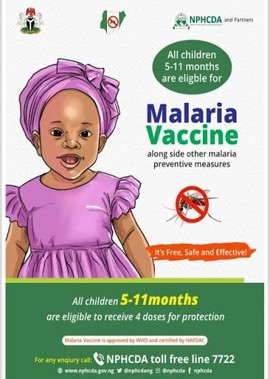
Fig 1. Sample of a published announcement
How multidirectional information asymmetry was revealed
Information asymmetry, as Kenneth Arrow (1963) first described, is a transaction in which one party holds more relevant information than the other, typically the provider knowing more than the patient. That model has a single information gap, running in one direction. This case is different: information decayed as it moved down the system, and no channel carried it back up. Three points held different, incomplete pieces of the picture.
The caregiver held only the fact of the vaccine's existence and the eligible age range. What was missing was information on where the vaccine could be obtained. This was not a caregiver failing to seek information. National coverage carried the message without specifying its geographic scope, and nothing at the point of care corrected that.
The health worker held knowledge of their own facility's stock, but lacked, by their own account, system-level information: whether the vaccine had reached the state at all, and where a family could reasonably be sent if it had not. "Try a higher level" is a rational response to a stock-out. It is the wrong response to a vaccine that has not yet arrived in the state at any level, and nothing in what I was told distinguished between the two.
The policy level held the most complete information: the allocation criteria, the phasing plan, the dose numbers, the funding split. What was missing here was a mechanism to push the locally relevant part of that information down to facility level, so that a worker outside Bayelsa and Kebbi could say "not yet available here" instead of defaulting to referral. Equally missing was a channel to carry caregiver experiences back up, so that the system could register that families outside the two pilot states were seeking the vaccine and being sent on searches that could not succeed.
A simple figure captures the shape of the problem:
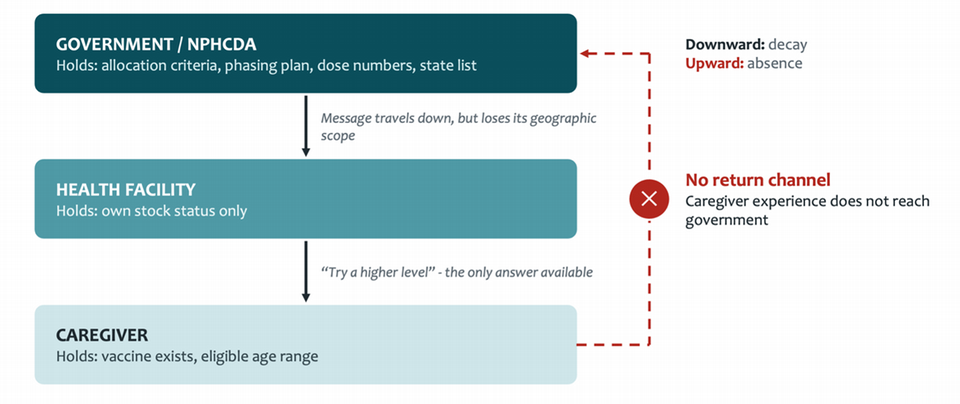
Fig. 2. The direction of information loss
Each level acted reasonably on the information it had. The asymmetry was structural, not necessarily a failure of any one actor, and it ran in more than one direction at once: downward as decay, and upward as absence.
How this can be improved, and what health promotion theory suggests
Closing a gap like this is usually framed as a matter of "raising awareness." The PRECEDE-PROCEED model, one of the most established frameworks for planning health promotion interventions, suggests a more precise diagnosis (Green & Kreuter, 2005). The model sorts what shapes a health behaviour into three kinds of factors: predisposing factors, the knowledge and attitudes that make someone want to act; enabling factors, the resources, skills and access that let them act; and reinforcing factors, the feedback and support that follow the action and determine whether it continues.
Mapped onto this case, my predisposing factors were intact. I knew the vaccine existed, and I wanted it for my ward. My enabling factors were not; this was revealed in the fact that the location information, the facility readiness, the referral pathway, and all the practical scaffolding that would have let that intention succeed were missing or misdirected. And there were no reinforcing factors at all. Nothing in the encounter, at any facility, told me the effort was reasonable or gave me a next step that could work. PRECEDE-PROCEED's insight is that awareness campaigns typically address only the predisposing factor. The rollout's messaging was strong on that count. It could not substitute for the enabling and reinforcing pieces that determine whether awareness becomes access.
Three concrete changes follow from this diagnosis. First, national messaging about a phased rollout should state the phase explicitly, not just the eligibility criteria, so families outside the current phase know to wait rather than search. Second, every facility, including those in states not yet reached, should have a standard response, “This vaccine is not yet here; it is currently in _____ states, and you can ask ______ about timing.” A referral should point toward the vaccine or say plainly that there is none available yet. Third, the system needs a route for caregiver experience to travel back to policymakers, even something as simple as a public log of where the rollout has and has not reached, updated as it expands. Publishing a rollout timeline that can be checked against progress would let a phased introduction remain phased without leaving families with no way to distinguish scarcity from absence.
Closing
Nigeria's malaria vaccine rollout is, on its own terms, a public health achievement. But an achievement measured by doses delivered and states reached is not the same as an achievement measured by what a family experiences trying to find the vaccine. In my experience, the search cost time, money and effort I could afford to spend. A caregiver with less of any of those would likely have stopped earlier, without ever learning why the search failed. Information asymmetry, understood as a structural condition running in more than one direction, provides a more precise explanation of that gap than "awareness" does, and it points to a more specific set of fixes: not “more messaging”, but “accurate messaging”, referral practice and feedback channels built for the phase the rollout is actually in.
References
Arrow, K. J. (1963). Uncertainty and the welfare economics of medical care. American Economic Review, 53(5), 941–973.
Federal Ministry of Information and National Orientation. (2026, April). FG moves to end malaria, develops new National Malaria Strategic Plan 2026 to 2030. https://fmino.gov.ng/fg-moves-to-end-malaria-develops-new-national-malaria-strategic-plan-2026-to-2030/
Green, L. W., & Kreuter, M. W. (2005). Health program planning: An educational and ecological approach (4th ed.). McGraw-Hill.
WHO Regional Office for Africa. (2024, December 5). Nigeria introduces R21 vaccine in a pivotal move for malaria control. https://www.afro.who.int/countries/nigeria/news/nigeria-introduces-r21-vaccine-pivotal-move-malaria-control
World Health Organization. (2026, May 1). Child mortality (under 5 years). https://www.who.int/news-room/fact-sheets/detail/child-mortality-under-5-years