

Search Website
No safe and effective Ebola response without trust
Elysée Nouvet (PhD), Associate Professor, School of Health Studies, Western University; Celine Halim (BHSc candidate), Western University
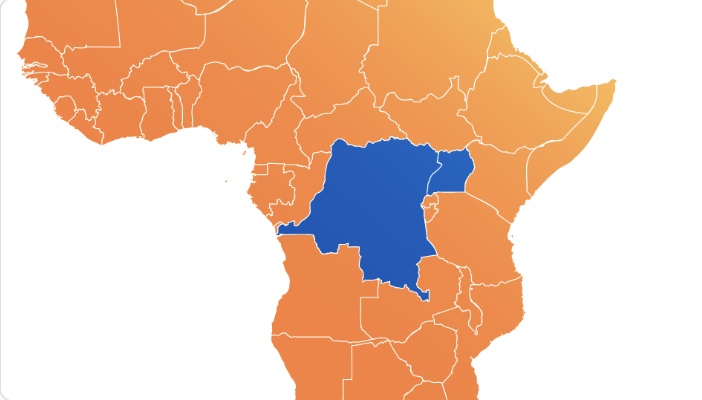
On May 21, 2026, locals set fire to an Ebola treatment center in Ituri province, Democratic Republic of Congo. A few days later, two other Ebola treatment centres were subject to attacks by angry community members in this Eastern part of the country (Pronczuk et al., 2026). Some early coverage of these events attributed this violence to a lack of understanding and a need for further education in the region around the importance of dead body management designed specifically to limit the spread of the highly infectious and deadly Ebola (WHO, 2026a). If there is one thing the first author has learnt from over 20 years of studying community relationships with public health authorities, it is that resistance to those authorities is rarely primarily a matter of education and understanding (Pronczuk et al., 2026).
Safe & Dignified Burials do clash with cultural tradition
Ebola as a viral hemorrhagic fever is highly deadly. One of the most unique and dangerous aspects of the disease is that bodies remain infectious for several days after death, highlighting the importance of safe burial procedures (Labonte et al., 2026). Safe and dignified burials (SDBs) refer to burial procedures designed to respect cultural beliefs and traditions while minimizing disease transmission through appropriate infection prevention measures. First introduced in Sierra Leone during the 2014 Ebola outbreak in West Africa (Labonte et al., 2026), SDBs include strategies such as transparent communication, adaptations that allow greater family involvement, and proactive community engagement (Labonte et al., 2026). SDBs must be carried out by trained personnel donning Personal Protective Equipment (PPE). Working in teams, these volunteers or staff remove bodies from the place of death, decontaminating affected areas, and, when safe, creating opportunities for families to participate in the burial process. The Canadian Red Cross is the global leader in development of SDB and has been providing trainings on these to teams in Ebola affected countries since 2014.
SDBs are an essential component in controlling the spread of Ebola. Ideally, these extend and strengthen community engagement and trust between affected populations and any members of response teams external to the affected community.
There is no doubt that adherence to safe and dignified burials (SDBs) may clash with cultural expectations and traditions. Across Africa, as in most parts of the world, caring for the dead involves culturally specific practices that affirm the deceased’s place within the community and ritually prepare them for their passage to another world. These practices also provide time and space for those left behind to say goodbye and support one another in close physical proximity to the person they have lost. In SDBs, due to the extremely infectious nature of Ebola virus, only persons trained for this task and fully suited in PPE can handle the body. When possible, religious leaders, community leaders, and family members participate in final rites and prayers. However, family members are not permitted to ritually wash, touch, or dress the deceased. They are placed in a thick plastic body bag and buried in designated grounds rather than a location of the family’s choice (Labonte et al., 2026).
It is not difficult to imagine the distress one might feel witnessing a loved one—in many instances already isolated for several days—being removed from a health centre or home in a body bag by strangers dressed in PPE. But surely, if one knew this procedure was the only way to prevent further deaths from a terrifying disease, one would find a way to accept it?
Trust is fundamental
In grief, we are not rational. We cannot dismiss that reactions in the midst of a public health emergency can be driven by physiological arousal that trump what one’s rational mind recommends. But if we explicate resistance to SDBs as being the result of emotions running high, a lack of understanding, a perceived violation of cultural norms, or a combination of those factors, we would be leaving out a crucial factor: trust.
It was during a meeting organized by GloPID-R on May 26 that the first author came to understand the limitations of mainstream accounts, which often framed attacks on healthcare workers as resulting from clashes between SDB practices and local culture, or from a lack of understanding.
The GloPID-R meeting convened public health and social science experts from the affected countries and around the world. The goal was to brainstorm and identify gaps in knowledge about events in the Ebola-affected areas that might guide rapid research that could in turn increase effect control of the outbreak. The question of SDBs was posed: were the protocols being practiced by response teams not aligned with community definitions of dignified burials? Would further research on SDBs reduce risks of future resistance? The answer from the DRC rep on the call was swift. The issue, he noted, had nothing to do with SDB protocols. The issue was that many community members did not believe Ebola was the cause of deaths. If Ebola were accepted as real, and as the cause of death, the population would accept SDBs.
The presence of the Ebola virus is in question in some communities. Given the challenges of conducting research in conflict-affected regions, it is not yet clear what is believed locally to be causing the severe illness and deaths that are attributed by experts to Ebola.
The affected regions are characterized by high numbers of displaced populations who have witnessed and faced various forms of structural and acute violence on an ongoing basis. Surviving in this area means surviving risks from ongoing armed conflict between government and rebel groups. It means knowing, for the majority, how to subsist with no stable source of income, no protection from law enforcement, and in extreme poverty. It means relying on observation, word of mouth, religious institutions or other relations for news, given national and regional coverage of events is associated with anything but truth. A majority of the people in the region live in extreme poverty, with limited access to education, healthcare, and high levels of distrust toward the army and police, associating them with harm, rather than protection.
In a context where many have experienced harm at the hands of outsiders, it is not surprising that some distrust information provided even by well-trained community engagement workers who are themselves perceived as outsiders. While some accept the seriousness of the health threat, they may still not accept that there is no human malintent behind it. Aid worker Kalongo Rwabikanga reported that when his team arrived in Bunia, crowds immediately surrounded their vehicles and pelted them with rocks while shouting, “You are the one who brought Ebola here to kill our people, so we are going to kill you all, and then we're going to burn your vehicle” (Goodyear, 2026). It is shortly afterward, that one of the team’s Ebola isolation tents was set on fire on May 21.
No infectious disease control without community engagement and trust
On May 22, the first meeting of the Internal Health Regulations (IHR) emergency committee took place. Discussions surrounding risk communication and community engagement were heavily emphasized. As the WHO’s interim recommendations for response to the current public health emergency note, large-scale trust-building interventions, often involving religious leaders and traditional healers, allow communities to actively contribute to awareness efforts and strengthen participation in public health responses (WHO, 2026a). Activating local networks and trusted community figures are key, to promote earlier detection and encourage supportive behaviours (Ibid). It seems everyone knows trust building is key. Now, the question remains, what specific practices, modes of communication, and accompanying activities, will work in the present outbreak and its political, social landscape?
Conclusion
As of July 4, 2026, the Centre for Disease Control reported 1561 confirmed cases, resulting in 506 confirmed deaths. Recognizing that outbreaks are not controlled through medicine alone, but through trust, communication, and respect for local community perspectives is essential. Taken together, these dynamics show that outbreak control is far more complicated than a technical or logistical challenge. And it is not just a matter of increasing affected population “understanding.”
There is no doubt that education surrounding Ebola transmission and safe burial practices remains crucial as part of the response. But so long as affected populations either do not believe Ebola is behind cases identified as such, or believe outsiders are bringing Ebola into the region, the number of cases may continue to rise, and the risk of violence directed toward healthcare workers will remain.
References
Centre for Disease Control (CDC) (2026, July 4). Ebola situation summary. https://www.cdc.gov/ebola/situation-summary/index.html
Goodyear, S. (2026, May 26) Congolese aid worker says he narrowly escaped angry mob outside Ebola hospital. CBC Radio – As It Happens. https://www.cbc.ca/radio/asithappens/congo-aid-worker-attacks-9.7212915
Labonté, J. M., Halim, C., Ormel, I., Lau, D., Ravikumar, R., & Nouvet, E. (2026). Challenges and facilitators for the implementation of safe and dignified burials during Ebola and Marburg virus disease outbreaks: A scoping review protocol. Infectious Diseases Now, 56(3), 105265. https://doi.org/10.1016/j.idnow.2026.105265
Pronczuk, P., Imray, G., Katumwa, J. K. (2026, May 21). Residents burn Ebola treatment center in Congo as anger grows over the outbreak. PBS News. https://www.pbs.org/newshour/world/residents-burn-ebola-treatment-center-in-congo-as-anger-grows-over-the-outbreak
World Health Organization. (2026, May 22). First meeting of the IHR Emergency Committee regarding the epidemic of Ebola Bundibugyo virus disease in the Democratic Republic of the Congo and Uganda—2026: Temporary recommendations. World Health Organization. https://www.who.int/news/item/22-05-2026-first-meeting-of-the-ihr-emergency-committee-regarding-the-epidemic-of-ebola-bundibugyo-virus-disease-in-the-democratic-republic-of-the-congo-and-uganda-2026-temporary-recommendations